PhD Researcher · University of Groningen

QS 2027 #157 · U.S. News 2026–2027 #77 ↗

Xiaodong Han

韩笑东

Open to academic & industrial opportunities

Railway engineering · Track materials and component mechanics · Concrete and smart sleepers · Composite materials and timber strengthening · Vehicle–track dynamics · Vibration measurement and smart sensing · Track irregularity and support-stiffness estimation · Rail corrugation and ballast assessment · Physics-constrained machine learning · Non-destructive testing and structural health monitoring · Predictive maintenance

My work spans railway materials and structural components, vehicle–track dynamics, vibration measurement and inverse condition estimation.

Materials and components
My research includes ultra-high-performance concrete (UHPC), non-prestressed steel-fibre, recycled-material and PU-tube self-healing concrete sleepers, alongside collaborative work on CNT self-sensing sleepers. It also covers steel turnout sleepers, FFU composite-sleeper fastenings, GFRP and carbon-fabric reinforcement of timber sleepers, and hybrid strengthening of timber columns.
Dynamics and monitoring
Laboratory tests, field measurements and numerical models support research on vehicle–track dynamics, track irregularity and support-stiffness estimation, axle-box and trackside vibration, camera-based measurement and rail-sensing technologies.
Ongoing research
Current work investigates rail-corrugation mechanisms and maintenance, ballast assessment combining GPR and vibration, and physics-constrained learning for track irregularity reconstruction.
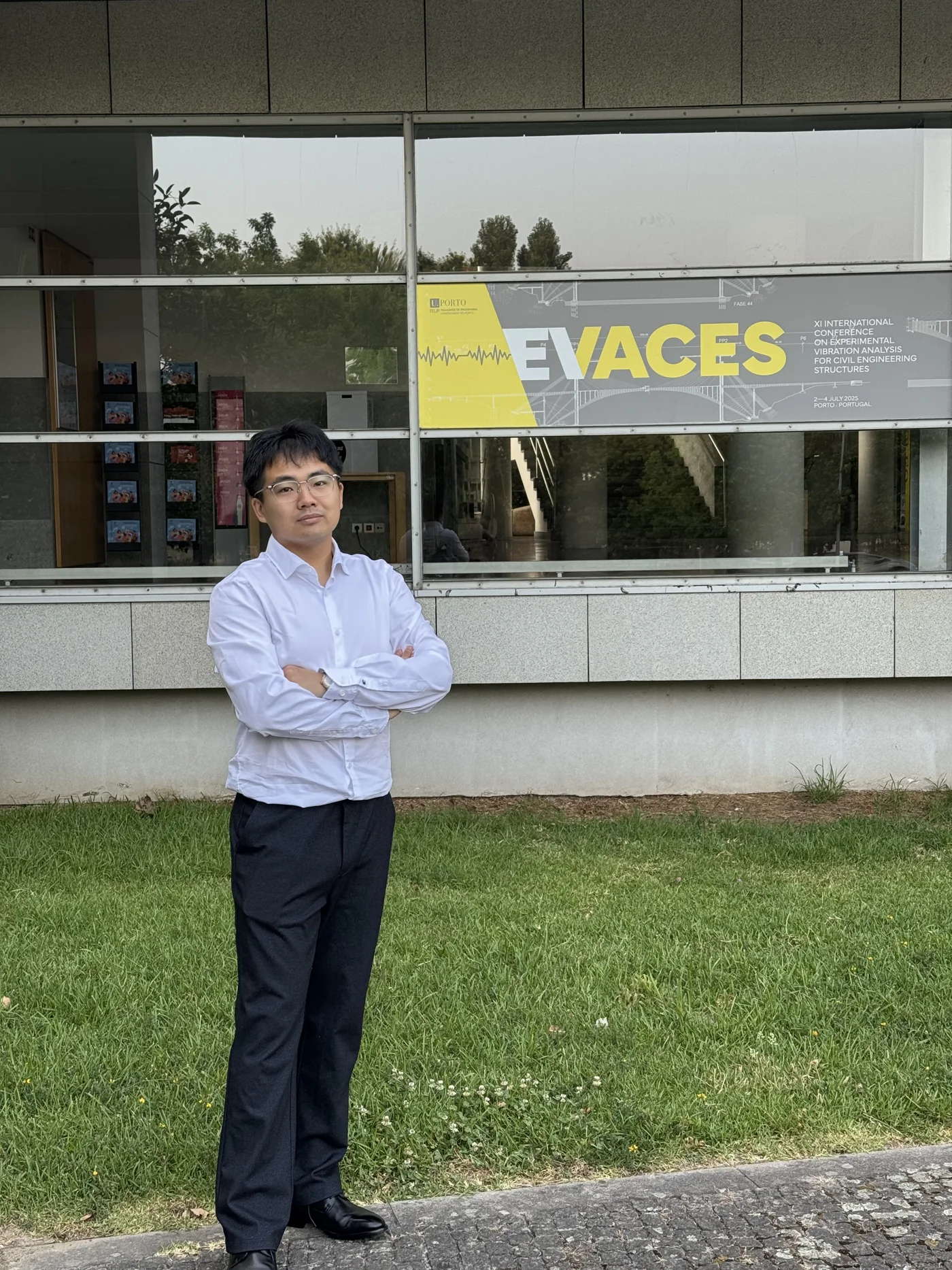
Xiaodong Han at EVACES 2025 in Porto
EVACES 2025, Porto
Peer-reviewed outputs1715 journal articles · 2 conference papers
Research approachMultiscaleMaterials, track components and vehicle–track systems
Railway patents2Turnout-sleeper strengthening and monitoring

Research areas

From structural materials and track components to sensing, dynamic models and inverse condition estimation.

Structures and materials

UHPC, steel-fibre and recycled-material concrete sleepers, CNT self-sensing and PU-tube self-healing designs, alongside steel/composite sleepers, fastenings and timber strengthening.

Full-scale testing · FEM · FRP strengthening
Sensing and vibration measurement

Axle-box and trackside vibration, camera-based measurement and smart rail sensing, with ongoing work on GPR and vibration for ballast assessment.

Time–frequency analysis · video tracking · sensor fusion

Dynamics and inverse estimation

Vehicle–track models and Kalman filtering for track geometry and stiffness estimation, alongside research on corrugation and physics-constrained learning.

Vehicle–track coupling · system identification · physics constraints

Research topics

Published work and current investigations, grouped by subject. Expand a topic to see its scope and related papers.

Dynamics, estimation and mechanisms

Track irregularity and support-stiffness estimationPublished research

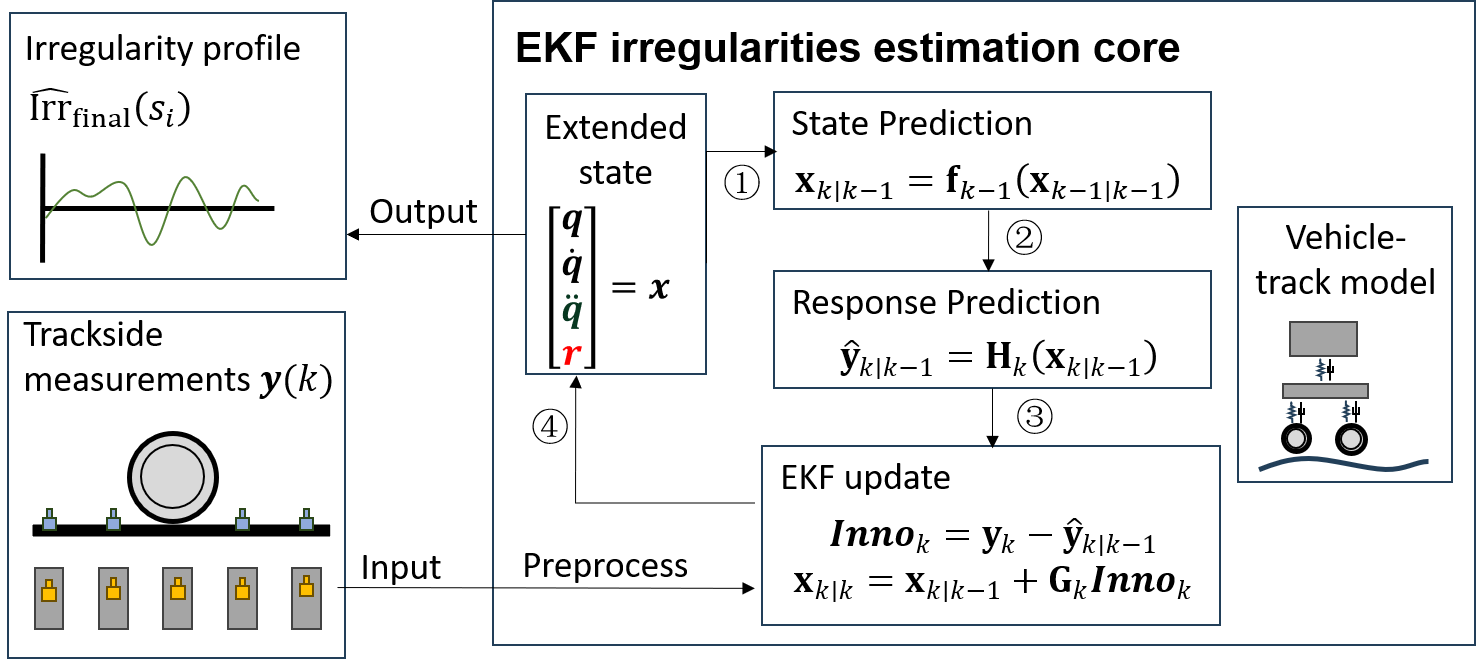
Vehicle–track models, model updating and dual/extended Kalman filtering are used to estimate track geometry and support condition from vehicle- and track-side responses. The trackside EKF study evaluates its method through numerical examples.

Vehicle–track dynamics · model updating · dual KF / EKF

Rail-corrugation mechanisms and wavelength selectionOngoing research

Vehicle–track simulation and field-response assessment are used to examine how changes in track support relate to wavelength-selective dynamic behaviour and rail corrugation.

Wheel–rail interaction · variable support · wavelength selection

See current research ↓
Corrugation monitoring, maintenance and recurrenceReview in preparation

A critical review connects corrugation mechanisms, measurement and diagnosis with grinding and other interventions. It distinguishes immediate surface restoration from evidence that subsequent growth or recurrence is suppressed.

Critical review · monitoring evidence · maintenance decisions

See current research ↓
Physics-constrained learning for continuous irregularity reconstructionOngoing research

Current work combines neural representations of spatial irregularity with vehicle–track dynamics to reconstruct a continuous track profile from vibration observations. Model development and comparative studies are ongoing; independent validation remains to be completed.

Neural representations · dynamics constraints · continuous-window inversion

See current research ↓

Sensing and condition monitoring

Axle-box acceleration and bridge-transition dynamicsPublished research

Experimental axle-box accelerations are analysed to compare time–frequency response characteristics on ballasted tracks and across a bridge transition zone.

Field measurement · axle-box acceleration · time–frequency analysis

Camera-based vibration measurementPublished research

Transformer-based CoTracker and dynamic mode decomposition are combined to investigate structural vibration measurement and dynamic characteristics from video tracking.

Video tracking · CoTracker · dynamic mode decomposition

Smart sensing railPublished review

A published review compares rail-sensing technologies, monitoring targets and application conditions, including the limits of measurement interpretation and practical use.

Rail sensing · optical-fibre sensing · technology review

Ballast assessment using GPR and vibrationOngoing research

Ground-penetrating radar features are investigated together with axle-box vibration and auxiliary inspection information to interpret ballast structure and condition.

Ground-penetrating radar · vibration features · multimodal assessment

See current research ↓

Structural materials and strengthening

UHPC, steel-fibre and recycled-material concrete sleepersPublished research

Experimental and numerical studies examine sleeper mechanical response using ultra-high-performance concrete, non-prestressed steel-fibre concrete and recycled materials.

UHPC · steel-fibre concrete · recycled materials · mechanical testing

CNT self-sensing concrete sleepers and support-defect detectionPublished research

Collaborative experimental and numerical work on CNT self-sensing concrete sleepers examines response changes associated with hanging-sleeper defects and support-condition identification.

CNT concrete · self-sensing · hanging-sleeper defects

PU-tube self-healing concrete sleepersPublished research

Self-healing concrete sleepers incorporating different-size polyurethane tubes are investigated through development and performance evaluation.

Self-healing concrete · polyurethane tubes · performance evaluation

Steel turnout sleepers and composite-sleeper fasteningsPublished research

Tests and finite-element models examine the mechanical behaviour of steel turnout sleepers and fastening systems for fibre-reinforced foamed-urethane (FFU) sleepers.

Steel turnout sleepers · FFU · fastening systems · FEM

FRP strengthening and timber structuresPublished research

Work on GFRP- and carbon-fabric-strengthened timber sleepers is complemented by earlier collaborative research on the eccentric-compression behaviour of hybrid-strengthened square timber columns.

GFRP / CFRP · timber sleepers · strengthened timber columns

Academic work

Connections between material behaviour, component response, system dynamics and the quantities that can be measured.

  • Mechanical experiments and numerical modelling
  • Model-constrained inverse estimation
  • Evidence-based interpretation of measurements

Engineering application

Measurement, modelling and diagnostic methods for track inspection, component assessment and maintenance research.

  • Sleeper, fastening and strengthening assessment
  • Onboard, trackside and camera-based monitoring
  • Track geometry and ballast-condition diagnosis

Publications

17 peer-reviewed publications spanning railway condition estimation, vibration measurement and track-component mechanics: 15 journal articles and 2 conference papers. Journal versions replace earlier preprints.

Research highlights

Experimental setups, field measurements, estimation workflows and sensing concepts from work across the research portfolio.

GFRP-reinforced timber sleepers — Journal of Railway Science and Technology · 2026
Journal of Railway Science and Technology · 2026

GFRP-reinforced timber sleepers

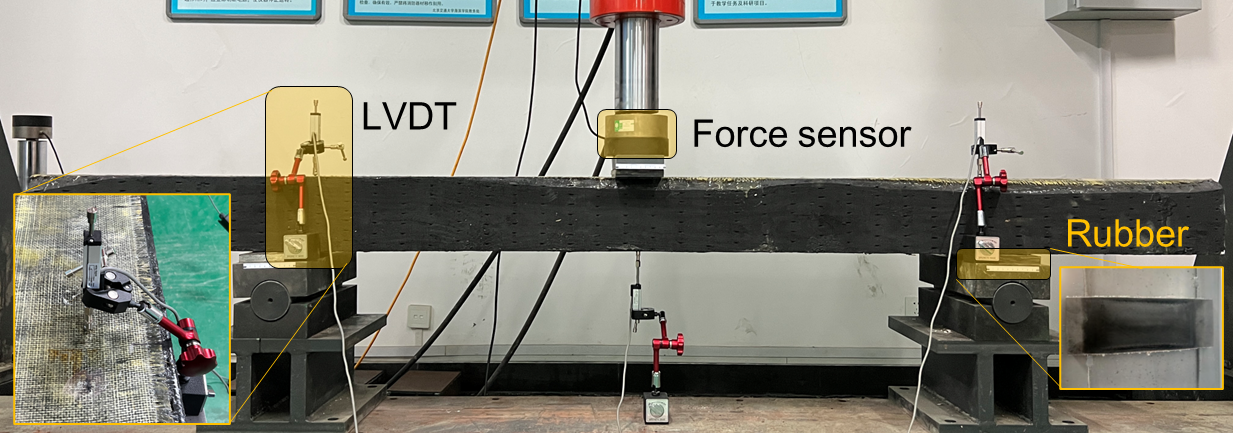
Instrumented three-point bending tests assess how GFRP wrapping changes the flexural response of timber sleepers.

Author manuscript · Fig. 6

Trackside irregularity estimation — Engineering Structures · 2026
Engineering Structures · 2026

Trackside irregularity estimation

An extended Kalman filter estimates track irregularity from fixed rail or sleeper responses. Performance is evaluated numerically.

Author manuscript · Fig. 1

Smart sensing rail — Journal of Rail and Rapid Transit · 2026
Journal of Rail and Rapid Transit · 2026

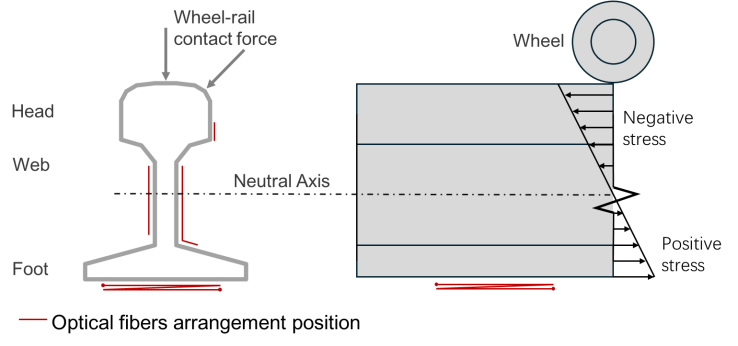
Smart sensing rail

A review schematic relates optical-fibre placement to the rail cross-section, neutral axis and bending response under a passing wheel.

Author manuscript · Fig. 3

Joint condition estimation — Engineering Structures · 2026
Engineering Structures · 2026

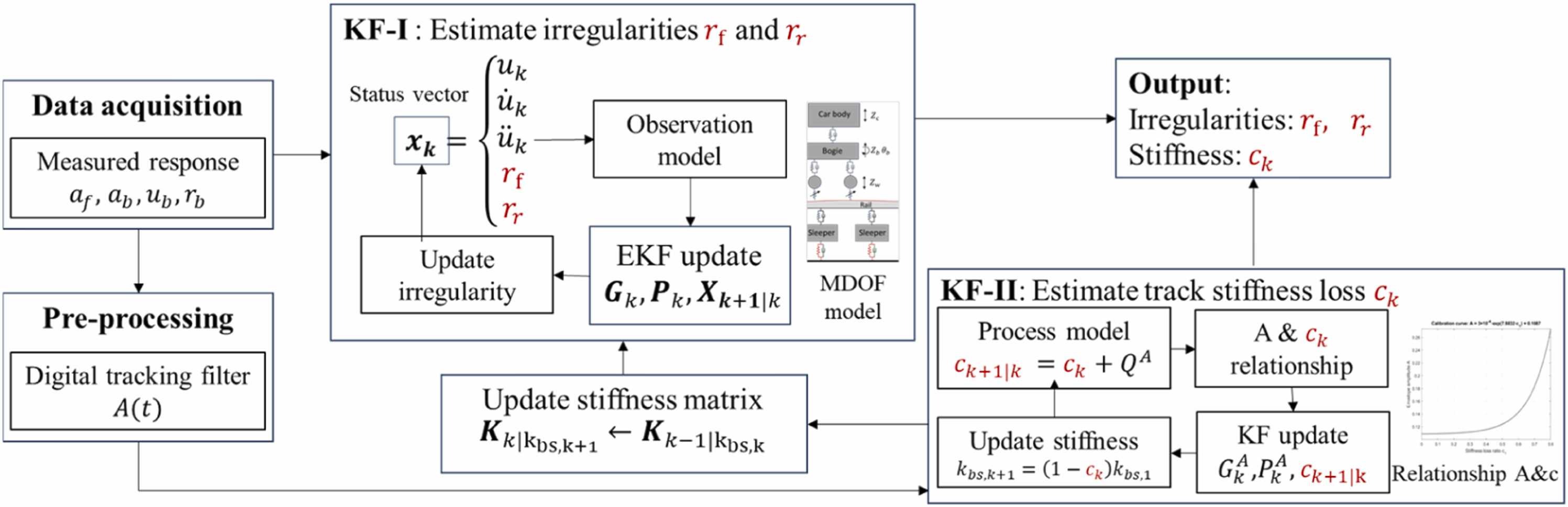
Joint condition estimation

A dual-filter architecture couples track-geometry estimation with resonance-based support-stiffness updating.

Camera-based vibration measurement — Sensors · 2024
Sensors · 2024

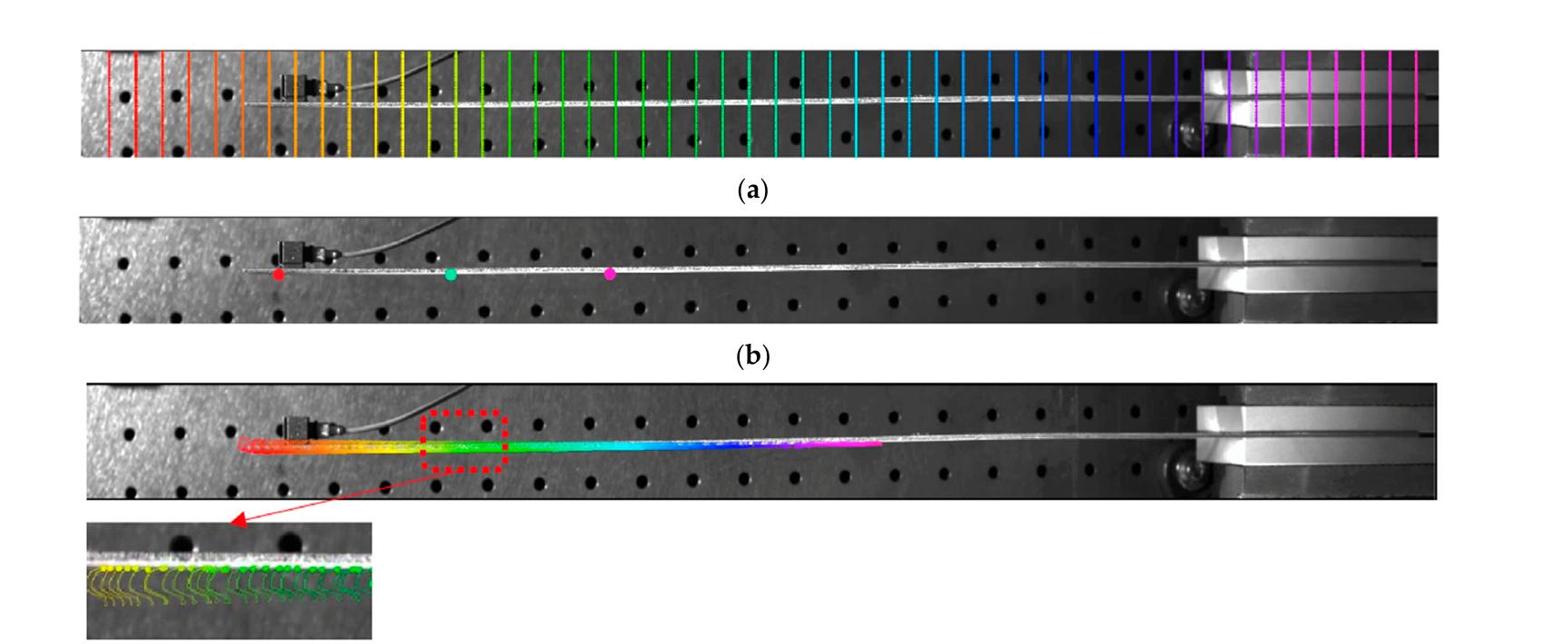
Camera-based vibration measurement

Video-tracked points on a laboratory beam provide motion information for vibration analysis using CoTracker and dynamic mode decomposition.

Published article · tracking example

Ultra-high-performance concrete sleeper testing — Construction and Building Materials · 2025
Construction and Building Materials · 2025

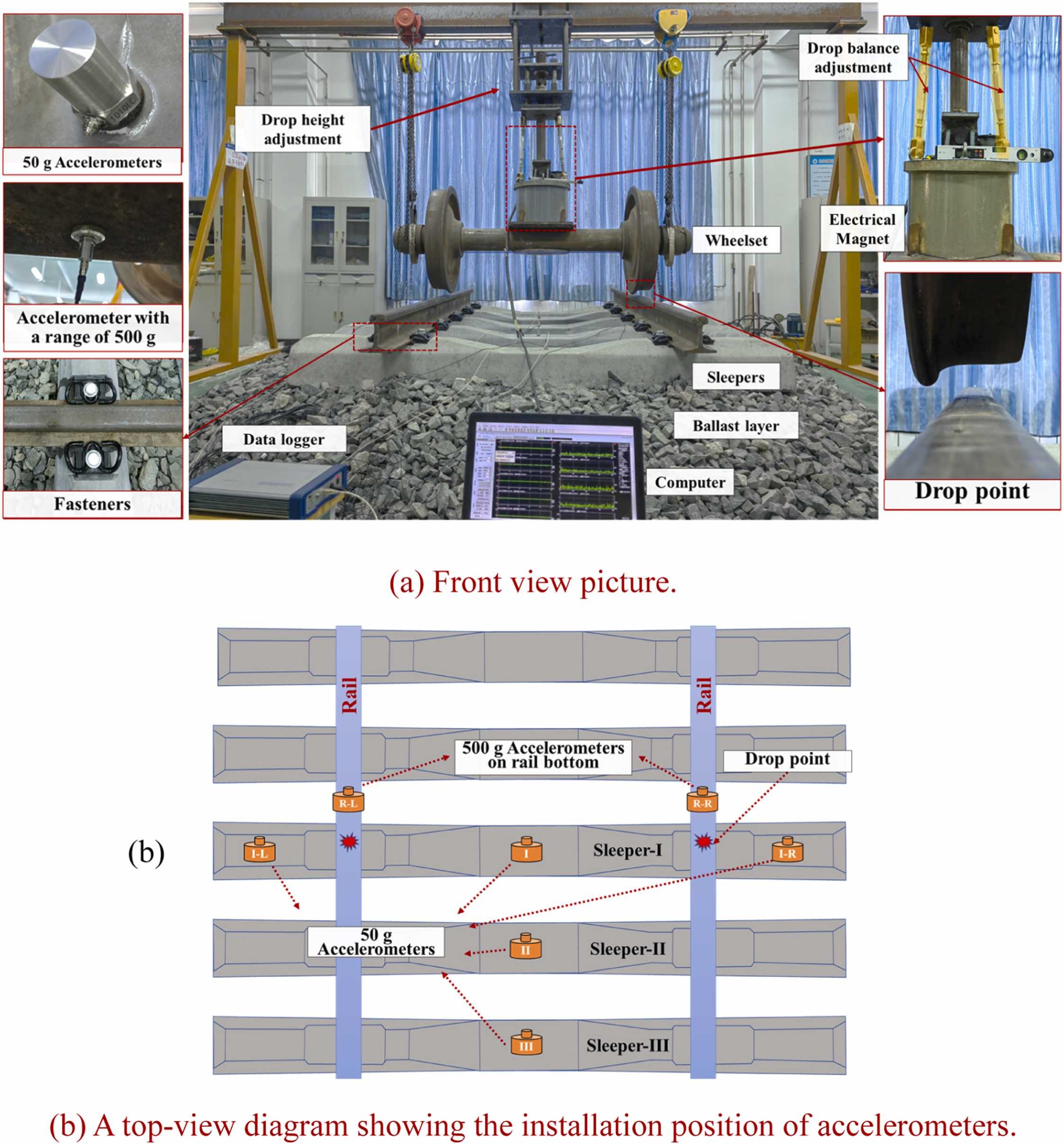
Ultra-high-performance concrete sleeper testing

An instrumented wheelset-drop setup measures the dynamic response of rails and sleepers in a ballasted track panel.

Published article · test setup

Steel turnout-sleeper testing — Construction and Building Materials · 2022
Construction and Building Materials · 2022

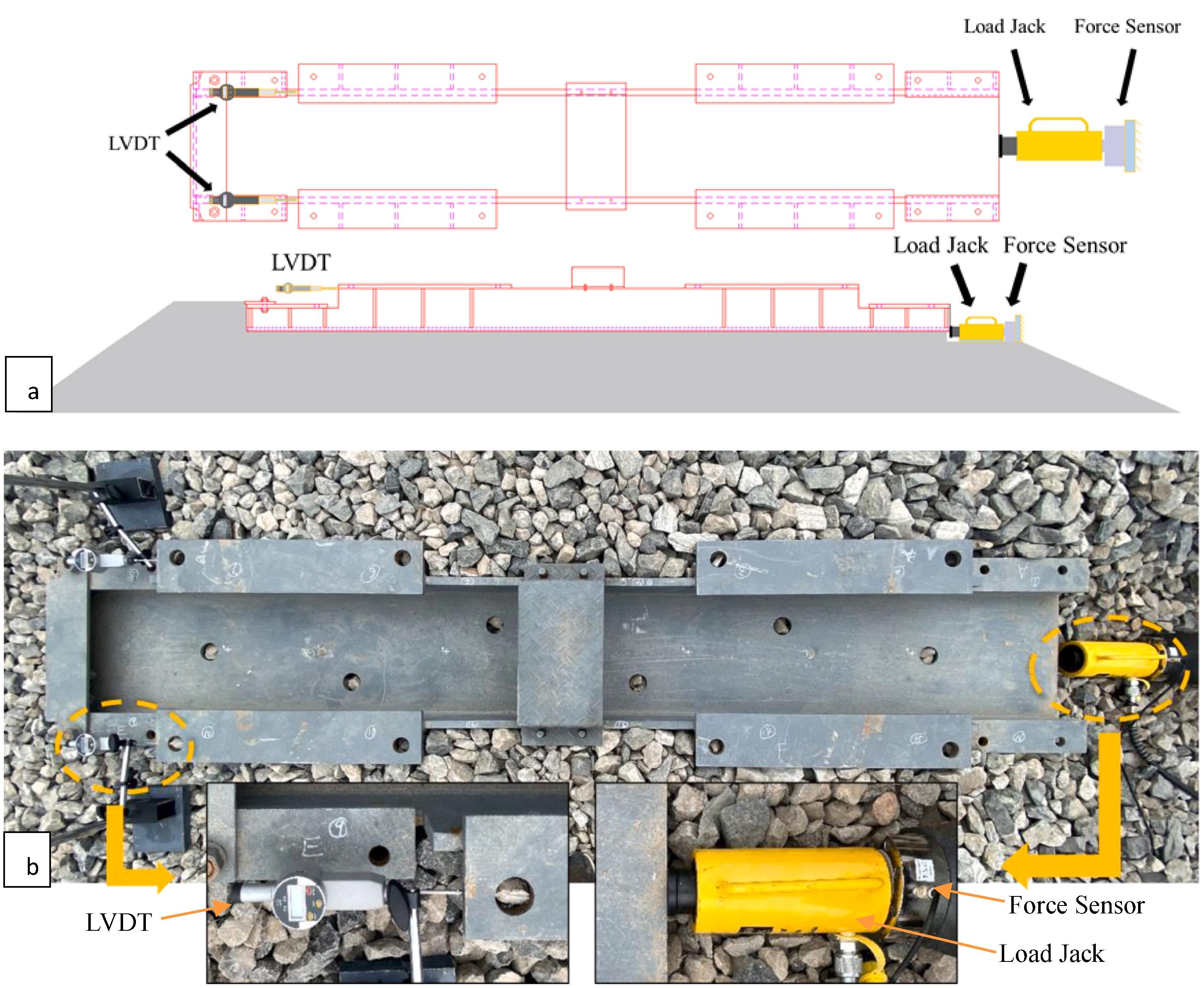
Steel turnout-sleeper testing

A jack, force sensor and LVDTs record the load–displacement response during lateral-resistance testing of a steel turnout sleeper.

Published article · lateral-resistance test

CNT self-sensing concrete sleepers — Construction and Building Materials · 2023
Construction and Building Materials · 2023

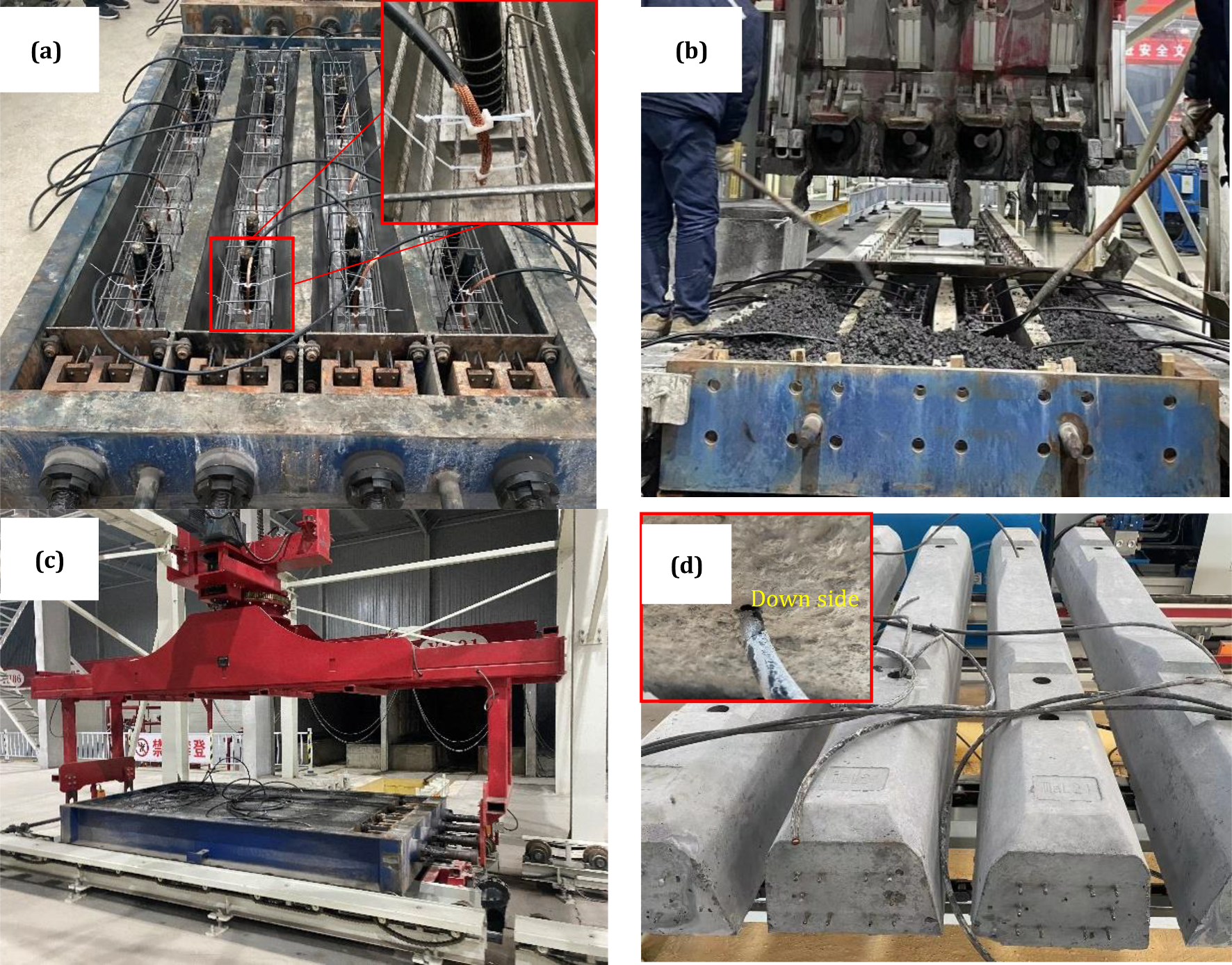
CNT self-sensing concrete sleepers

Electrode installation, concrete casting, curing and the finished sleepers illustrate the fabrication process in this collaborative study.

Siahkouhi et al. · Fig. 4

Axle-box measurements and bridge-transition cases — Measurement Science and Technology · 2025
Measurement Science and Technology · 2025

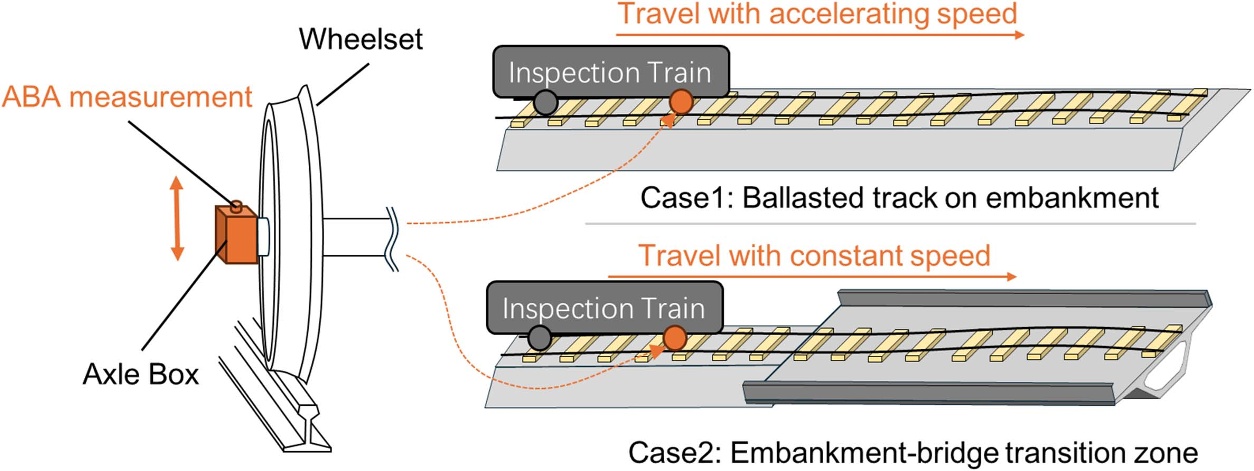
Axle-box measurements and bridge-transition cases

The schematic locates the axle-box sensor and shows the two experimental cases: ballasted track on an embankment and an embankment–bridge transition zone.

Han et al. · Fig. 9 · CC BY 4.0

Peer-reviewed publications

17 outputs
2026

Static and Dynamic Performance of GFRP-Reinforced Timber Railway Sleepers: Experimental and Numerical Analysis

Journal articlePublished online · In press

Journal of Railway Science and Technology

View paper ↗
2026

Trackside-measurement-based railway track irregularity estimation using a vehicle-track model and extended Kalman filtering strategy

Journal article

Engineering Structures 369, Part 2, 123871

View paper ↗
2026

Smart sensing rail: Solutions, applications and challenges for railway condition monitoring

Review articleOnlineFirst

Proceedings of the IMechE, Part F: Journal of Rail and Rapid Transit

View paper ↗
2026

Joint estimation of railway ballasted track irregularities and stiffness using a dual Kalman filter strategy and dynamic vehicle–track model

Journal article

Engineering Structures 365, 123194

View paper ↗
2025

Experimental analysis on mechanical behaviour of ultra-high-performance concrete sleepers

Journal article

Construction and Building Materials 499, 143992

View paper ↗
2025

Time–frequency analysis of axle-box accelerations in railway systems: experimental insights on ballasted tracks and a bridge transition zone

Journal article

Measurement Science and Technology 36, 056001

View paper ↗
2025

A model updating framework for railway ballasted track stiffness irregularity interference based on a 2D dynamic train–track MDOF model

Conference paper

EVACES 2025 · LNCE 674, 745–752

View paper ↗
2025

Experimental analysis on non-prestressed steel fibre-reinforced concrete sleepers

Journal article

Railway Standard Design 69(7), 74–78, 129

View paper ↗
2025

Experimental and numerical investigation of self-sensing smart concrete railway sleepers with a hanging-sleeper defect

Conference paper

Construction Applications of Virtual Reality · LNCE 685, 213–223

View paper ↗
2024

Camera-based dynamic vibration analysis using transformer-based CoTracker and dynamic mode decomposition

Journal article

Sensors 24(11), 3541

View paper ↗
2024

Improving the mechanical performance of railway concrete sleepers using recycled materials: an experimental and numerical study

Journal article

Proceedings of the IMechE, Part F: Journal of Rail and Rapid Transit

View paper ↗
2023

Development and performance evaluation of self-healing concrete railway sleepers using different-size PU tubes

Journal article

Engineering Structures 283, 115920

View paper ↗
2023

Railway ballast-track hanging-sleeper defect detection using a smart CNT self-sensing concrete railway sleeper

Journal article

Construction and Building Materials 399, 132487

View paper ↗
2022

Experimental and finite-element assessment of the fastening system of fibre-reinforced foamed urethane composite sleepers

Journal article

Engineering Failure Analysis 142, 106693

View paper ↗
2022

Experimental and numerical analysis on mechanical behaviour of a steel turnout sleeper

Journal article

Construction and Building Materials 329, 127133

View paper ↗
2022

Improving the mechanical performance of timber railway sleepers with carbon-fabric reinforcement: an experimental and numerical study

Journal article

Journal of Composites for Construction 26(1)

View paper ↗
2021

Experimental study on the eccentric-compression behaviour of hybrid-strengthened square timber columns

Journal article

Journal of Harbin Institute of Technology

View paper ↗

Patents

Two patents related to railway turnout sleepers.

2021

Lateral-resistance strengthening structure for steel turnout sleepers

2021

Steel turnout-sleeper cover plate with an integrated monitoring function

Ongoing research

Corrugation mechanisms and maintenance

Simulation and field-response assessment examine variable support and wavelength selection. A parallel review connects physical mechanisms, monitoring, maintenance interventions and recurrence evidence.

Multimodal ballast assessment

GPR, vibration and auxiliary inspection information are investigated together to interpret ballast structure and condition.

Physics-constrained irregularity reconstruction

Neural representations and vehicle–track dynamics are combined for continuous spatial reconstruction from vibration observations. Model development and comparative studies are ongoing; independent validation remains to be completed.

The ongoing studies above are separate from the published results. Validation scope is stated for each project, and no claim of routine operational deployment is made.

Experience

Education

2023–present

PhD, Non-Destructive Testing & Structural Health Monitoring

University of Groningen

2020–2023

MEng, Railway Engineering

Beijing Jiaotong University

2016–2020

BEng, Civil Engineering (Urban Rail)

Beijing Jiaotong University

Outstanding Master’s Graduate, Beijing Jiaotong University, 2023

Methods and tools

Dynamics and inversion

Vehicle–track coupling, model updating, dual/extended Kalman filtering

Measurement and signals

Axle-box and trackside vibration, GPR, time–frequency analysis, CoTracker and DMD

Structures and materials

Sleeper testing, FRP strengthening, self-sensing and self-healing concepts

Numerical tools

ABAQUS, ANSYS, Simpack, RecurDyn, EDEM, Rocky DEM

Learning and validation

Physics constraints, neural representations, parameter studies and model–measurement comparisons

Research collaboration and engineering R&D

Open to collaboration and research-focused opportunities in railway engineering, structural health monitoring and predictive maintenance.